SKU: 27175989749
chlorophytum charlotte

chlorophytum charlotte Chlorophytum comosum 'Ocean' – Foliage Factory

Sale price$21.83 Regular price$24.26
Save 10%

Pay in installments of $6.07 with ShopPay, AfterPay and Klarna

Shipping Estimate
USA
  • USA
  • CAN

Ships within 48 hours · Estimated delivery Jul 24 - Jul 29

Promo Codes Available:

For Your Every Summer RSVP, with Code: SUMMER15

Description

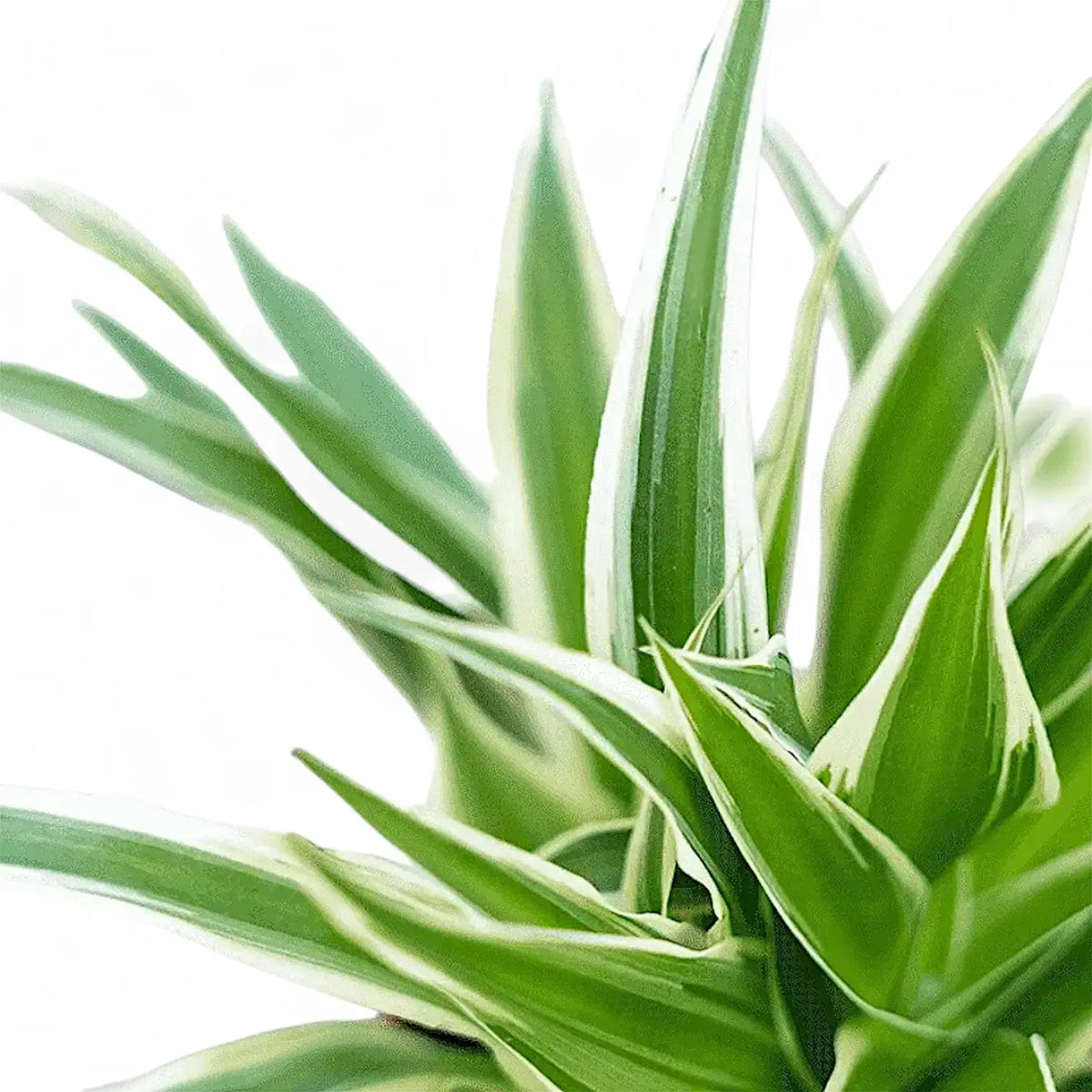
chlorophytum charlotte Chlorophytum comosum 'Ocean' – Foliage FactoryChlorophytum comosum 'Ocean' Chlorophytum comosum 'Ocean' is a compact spider plant cultivar with short, broad green leaves edged in cream. The cultivar forms a dense rosette with a tidy rounded shape, then matures into the familiar spider plant habit with arching flower stems and small plantlets. The foliage has a clean green centre, pale margins, and a slightly sturdy texture that keeps the plant looking full even while young. Mature plants can send

Chlorophytum comosum 'Ocean'

Chlorophytum comosum 'Ocean' is a compact spider plant cultivar with short, broad green leaves edged in cream. The cultivar forms a dense rosette with a tidy rounded shape, then matures into the familiar spider plant habit with arching flower stems and small plantlets.

The foliage has a clean green centre, pale margins, and a slightly sturdy texture that keeps the plant looking full even while young. Mature plants can send out slender stems carrying tiny white flowers followed by young plantlets. The rosette stays compact, and older stems can hang beyond the pot as the plant matures.

Compact Ocean spider plant traits

  • Compact spider plant cultivar with shorter, broader leaves
  • Green leaf centres with cream margins
  • Dense rosette habit with a neat container shape
  • Can produce white flowers and plantlets on arching stems
  • ASPCA-listed non-toxic species for cats and dogs

Species background and cultivar growth

Chlorophytum comosum belongs to the Asparagaceae family and is native across parts of tropical Africa into southern Africa. In habitat, the species grows as a perennial with rosettes of strap-shaped leaves and fleshy roots that store water through changing moisture conditions.

'Ocean' is a cultivated variegated selection of Chlorophytum comosum. 'Ocean' has a compact rosette, broader leaves and a cream-edged pattern. The plantlets form from flowering stems, so a mature specimen can shift from a tight leafy centre into a softer cascading display over time.

Keeping 'Ocean' compact and leafy

  • Light: Keep in bright filtered light or a bright room position away from harsh midday sun. Strong direct sun can mark the pale margins.
  • Watering: Let the upper part of the substrate dry before watering again. The fleshy roots hold moisture, so the pot should drain freely after each soak.
  • Substrate: Choose a loose mix that holds some moisture while staying airy. Perlite, fine bark, coco fibre, or mineral particles give the thick roots airflow and drainage.
  • Temperature: Keep conditions stable and above 15 °C. Cool wet substrate slows growth and increases root problems.
  • Humidity: Typical indoor humidity is fine. A humidifier can reduce dry-tip stress during heated indoor months.
  • Feeding: Use a light fertiliser dose during active growth. Heavy feeding can increase salt build-up and may reduce plantlet formation.
  • Repotting: Repot when fleshy roots crowd the pot. Move up one size and keep the rosette base level with the substrate surface.
  • Pruning: Remove old flower stems after plantlets are taken or once the stems dry. Trim brown tips cleanly if needed.
  • Propagation: Root plantlets once they have visible root initials, or divide a mature clump during repotting.
  • Outdoor summer placement: Warm sheltered outdoor shade can suit it during summer. Acclimate first and bring indoors before nights cool below 15°C.

Brown tips, soft centres and plantlet issues

  • Brown leaf tips: Often linked to irregular watering, dry air, salt build-up, or minerals in tap water. Flush the substrate and use rainwater, filtered water, or low-mineral water where needed.
  • Soft, collapsing centre: Check for water sitting in the rosette or a cold wet root ball. Improve airflow and let the substrate dry more evenly.
  • Few plantlets: Young plants may need more maturity. Overfeeding can also keep growth focused on leaves.
  • Scorched pale patches: Usually caused by direct sun on tender leaves. Move to filtered light and remove only fully damaged foliage.

Offset and seasonal growth notes

The cream margins on 'Ocean' are part of the cultivar’s stable leaf pattern. New leaves may vary slightly in width and curve as the plant matures, especially after repotting or seasonal growth changes.

Pet-safe status and plantlets

ASPCA records Chlorophytum comosum as non-toxic to cats and dogs. Chewing may still cause mild digestive upset or damage the rosette, so place young plantlets away from pets attracted to stringy leaves.

Spider plant name background

The accepted species name is Chlorophytum comosum (Thunb.) Jacques, in the family Asparagaceae. Chlorophytum is derived from Greek roots meaning green or yellow-green plant. The species epithet comosum means furnished with a tuft, referring to the rosette-like arrangement of the leaves. 'Ocean' is a compact cream-edged spider plant selection.

Chlorophytum comosum 'Ocean' forms a compact green-and-cream rosette that can mature into an offsetting spider plant.

Shipping Notes
  • Free Standard Shipping on $100+ Orders to the USA.
  • Except Preorder products are shipped in 48 hours.
  • Delivery to the USA:
  1. Standard Shipping : 3-10 business days
  • If time is of the essence, please consider selecting expedited delivery for faster service.
Exchange/Return Notes
  • We offer a 30-day return/exchange service after receiving.
  • Final sale items are not eligible for returns or exchanges.
  • To process your return/exchange, please contact us at [email protected]
  • Please click here for more details>>> Return & Exchange Policy
SKU: 27175989749

Discover Niche Categories That Outsell chlorophytum charlotte

Top-Converting Item to Boost Your Average Order

4.1 ★★★★★
Based on 13 reviews
Sort
Highest Rating
Newest First
Oldest First
Product Reviews
T
Verified Purchase
Trendy Chic
Lexington, US
★★★★★ 5
Not what I was expecting, but I liked it.
Format: Paperback
My first book by Emma Slate. Wonderful writing style, I wanna read some more MC books.
WAS THIS REVIEW HELPFUL?YesReportShare
Reviewed in the United States on September 8, 2024
M
Verified Purchase
Matthew
Grantham, US
★★★★★ 1
Poor read
Format: Paperback
Not worth the hype. Was poorly written and had to put it down and not finish it.
WAS THIS REVIEW HELPFUL?YesReportShare
Reviewed in the United States on May 20, 2025
T
Verified Purchase
T
Alexandria, US
★★★★★ 4
Great story
Format: Paperback
I’m not an avid reader, but this was finished in a few days. Such a good book!
WAS THIS REVIEW HELPFUL?YesReportShare
Reviewed in the United States on June 14, 2025
A
Verified Purchase
AMD
Lexington, US
★★★★★ 3
Won’t be buying book two.
Format: Paperback
Entertaining enough but poorly written. Lots of typos. Won’t be buying book two.
WAS THIS REVIEW HELPFUL?YesReportShare
Reviewed in the United States on July 8, 2025
D
Verified Purchase
Dr.C.J.Singh.Wallia
Lexington, US
★★★★★ 5
An Excellent Primer on Novel-Writing
Format: Paperback
WIRED FOR STORY By Lisa Cron Reviewed by C J Singh (Berkeley, California) Excellent Primer on Novel-Writing In Berkeley, California, we happily have access to four independent bookstores that display literary novels and creative-writing craft books. Browsing, I picked up two books by Lisa Cron on using "Brain Science" for writing fiction. The jacket quote by Caroline Leavitt rivetted my attention: "I'd never consider writing a novel without Lisa's input, and neither should you." As a longtime fan of Leavitt's novels "Is This Tomorrow," " Pictures of You, " "Girls in Trouble," I looked up Stanford Continuing Education where Leavitt regularly teaches online courses. As a Stanford Alumnus (Psychology PhD), I've taken several on-campus and online workshops on fiction-writing. While still at the bookstore, I promptly signed up for Leavitt's soon-to-begin course that uses two coaching books: Cron's Wired For Story and John Truby's The Anatomy of Story. I'm familiar with Truby's book and its nine excellent exercises. See my detailed review on amazon: https://www.amazon.com/review/R29NU7U6LAHGBV/ Here's my review of Lisa Cron's "Wired For Story" "WIRED FOR STORY' presents a unique, distinguishing feature among fiction-writing primers: throughout its text, the author includes excerpts from the published works of leading contemporary brain-scientists that validate the principles of narrative craft. Cron explains the principles of narrative craft in twelve well-organized chapters that focus on theme, the protagonist's issue, characters' bios, points of view, rising conflicts, subplots, suspense, reveals, and the arc from setup to payoff. At the beginning of each chapter, she presents sentences in italics that illuminate the cognitive-science underpinnings of narrative craft. Examples follow. "Cognitive Secret: When the brain focuses its full attention on something, it filters out all unnecessary information. Story Secret: To hold the brain's attention, everything in a story must be there on a need-to-know basis" (page 23). . "Cognitive Secret: Everything we do is goal directed and our biggest goal is figuring out everyone else's agenda, the better to figure out our own. Story Secret: A protagonist without a clear goal has nothing to figure out and nowhere to go" (p 65) . "Cognitive Secret: It takes long-term, conscious effort to hone a skill before the brain assigns it to the cognitive unconscious. "Story Secret: There's no writing; there's only rewriting" (p 219). Also remarkable are sentences in bold that challenge advice offered in some writing-craft workshops and books. Examples follow. "Myth: Write What You Know. "Reality: Write What You Know EMOTIONALLY" (p 62). . "Myth: Sensory Details Bring a Story to Life." "Reality: Unless They Convey Necessary Information, Sensory Details Clog a Story's Arteries" (p 118). . "Myth: `Show, Don't Tell' Is Literal - Don't Tell Me John Is Sad, Show Him Crying. "Reality: `Show, Don't Tell Is Figurative - Don't Tell Me John Is Sad, Show Me WHY He's Sad" (p 152). Has the author introduced a Myth of her own? I am afraid so. On page 57, "No matter whose point of view you're writing in, you may be in only one head per scene." In my opinion, the Reality is: No matter whose point of view you're writing in, you may be in only one head per PARAGRAPH. This is the new reality -- virtually every fiction-readers' perception has been reshaped by watching films and TV dramas that imply the camera engaged in frequent head-hopping in a scene. At the end of each chapter, Cron presents a concise series of checkpoints to remind the readers while they develop their work-in-progress. Throughout, she includes many examples from literary works and films. Literary works like Gabriel Marquez's "Love in the Time of Cholera," Margaret Mitchell's "Gone with the Wind," and Caroline Leavitt's "Girls in Trouble." Films like "It's a Wonderful Life," "Vertigo," and "American Graffiti." An inspiring citation for writers: " `Recent breakthroughs in neuroscience reveal that our brain is hardwired to respond to story.... It turns that a powerful story can have a hand in rewiring the reader's brain -- helping empathy, for instance - `which is why writers are, and always have been among the most powerful people in the world'. " (On p 239 of Endnotes is the specific citation of three scientists' 2009 article "On Being Moved by Art: How Reading Fiction Transforms the Self" in the Creativity Research Journal vol. 21, no.1 ) WIRED FOR STORY fully earns its title with its numerous citations of recent contributions of neuroscience that validate narrative craft. Examples of cited works included are: V. S. Ramachandran's "The Tell-Tale Brain: A Neuroscientist's Quest for What Makes Us Human"; Michael Gazzaniga's "Human: The Science Behind What Makes Your Brain Unique; and Steven Pinker's "How the Mind Works." These stellar books illuminate the nexus between art and science; their shining light reflects on Lisa Cron's book as a five-star primer for novel-writing.
WAS THIS REVIEW HELPFUL?YesReportShare
Reviewed in the United States on March 7, 2020

recommand products